


The Journal · Destination Guide
Suroeste Antioqueño: Colombia's Finca Country, an Hour from Medellín
July 2026
An hour southwest of Medellín, the city gives way to a landscape the rest of the world has not yet found: ridgelines terraced in coffee, whitewashed heritage pueblos with flower-hung balconies, and mountain plateaus where a single estate can command an entire valley. This is the Suroeste Antioqueño — Antioquia's coffee country — and for the buyer who wants land, air, and provenance rather than another address in the city, it is the most compelling frontier in the region.
the Suroeste Antioqueño
via the new Pacífico 1 autopista
the region's defining trade
our current Suroeste offering
Where the Suroeste is — and why it feels apart
The Suroeste is one of Antioquia's nine subregions: twenty-three municipalities fanning southwest from Medellín toward the Cauca River and the department of Caldas. It is, above all, coffee country — roughly 72% of the land in permanent crops is planted in coffee — and that single fact shapes everything, from the terraced green of the hillsides to the rhythm of the towns. Heritage pueblos such as Jericó, Jardín, Támesis, and Fredonia are among the most beautiful in Colombia: cobbled, walkable, and unhurried, their plazas framed by balconies of geraniums. It is the paisa countryside at its most postcard — and, until recently, its most remote.
An hour that used to be three
What has changed is access. Colombia's fourth-generation highway program — the Autopista Conexión Pacífico 1, with its new Amagá tunnel — now carries traffic from Medellín through Amagá, Titiribí, and Venecia on modern double roadway, cutting journeys that once ran to hours down toward a single one. The near Suroeste has become a comfortable weekend rather than an expedition, and for landowners the arithmetic is simple: seclusion without isolation, wilderness within reach of an international airport. It is the same corridor that will ultimately run all the way to Pereira and the Pacific ports — infrastructure that tends to pull value along behind it.
Cerro Tusa and a landscape with provenance
The region's natural signature rises from the municipality of Venecia: Cerro Tusa, a near-perfect triangular peak widely described as the world's largest natural pyramid. A sanctuary to the Zenufaná peoples more than two thousand years ago and now protected as an archaeological park, it is the kind of landmark that gives a region its identity — and lends a home built within its sightline a story that cannot be manufactured.
Amagá & Titiribí: the corridor that mined a fortune
The Suroeste's early history is written underground. In the twin towns of Amagá and Titiribí — barely an hour south of Medellín, and the corridor La Siria sits within — the region's first wealth was literally dug from the earth. Titiribí was one of nineteenth-century Colombia's great gold names: its El Zancudo mine, worked from around 1793 and consolidated as a company in 1848, grew into one of the largest enterprises in the country, employing well over a thousand people and pouring some sixty-eight pounds of gold a month at its 1887 peak. A few kilometres north, Amagá built its name on coal — the mines of the Sinifaná basin fuelled the Antioquia Railway, the textile mills of the Medellín valley, and the department's first ironworks, the Ferrería de Amagá of 1865. The great mines are quiet now and the hills long since green again, but the corridor keeps a depth of provenance that newer places simply cannot manufacture.
What a country estate here buys
This is finca country in the truest sense: working and leisure estates, coffee and cattle land, and building plots with 360-degree views, at entry points well below Medellín's prime corridors. For the international buyer the appeal is the same recalibration that draws capital to Colombia at large — extraordinary land and setting for a fraction of comparable prices elsewhere — but here it arrives with space, silence, and an agricultural upside that scarce urban addresses cannot offer. Our own current offering in the region, La Siria, is emblematic: a 15,398 m² plateau at the dead-end of a private road beside Cerro Tusa, roughly 35 minutes from Medellín by the new route, offered turnkey with surveys, utilities, and architectural plans complete — the last private lot in its original subdivision.
A landscape lived on horseback
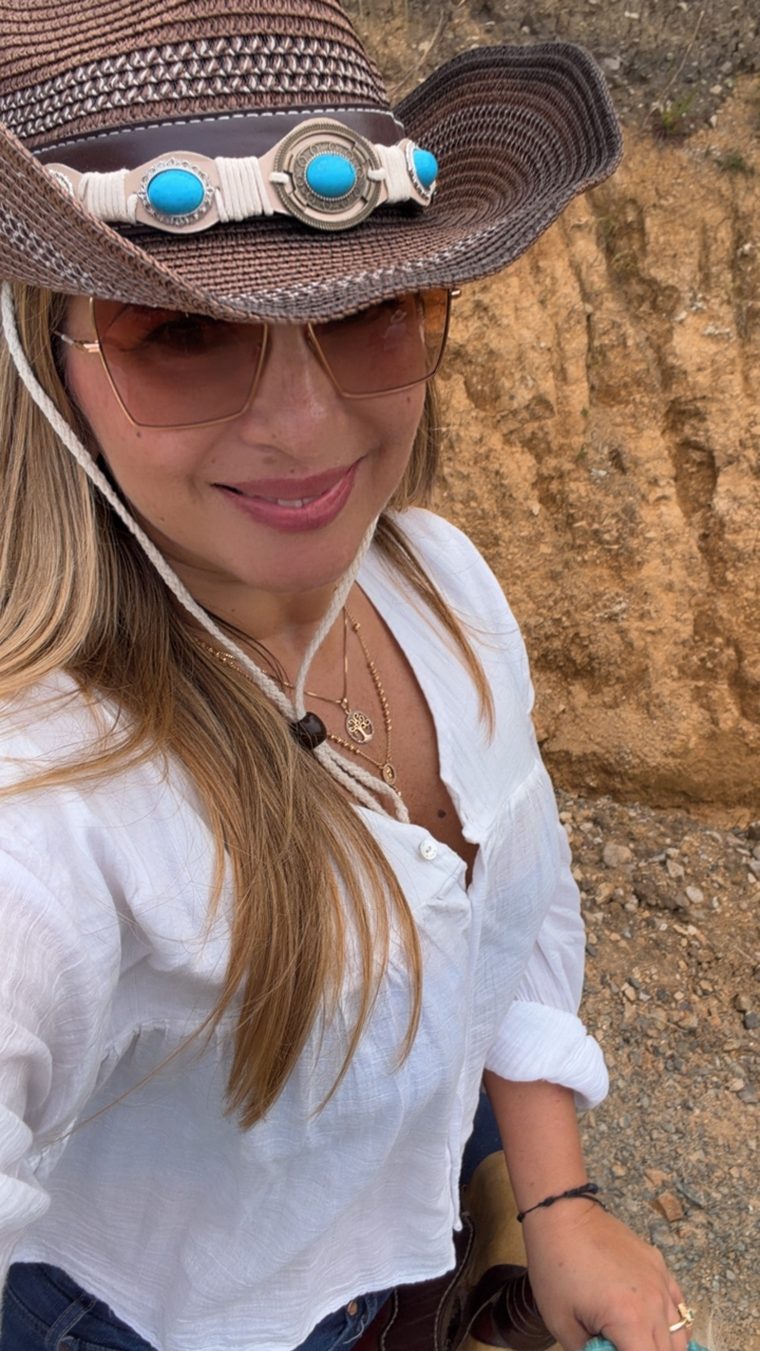
Some of the Suroeste is best met at a walking pace, in the saddle. The cabalgata — the paisa tradition of riding out through the hills — is woven into country life here, and the bridle paths that thread the coffee slopes around Jericó, Támesis, Amagá, and Cerro Tusa open long views that no road reaches. For many owners it becomes the truest way to know their own land and the country beyond it: unhurried, close to the ground, and quintessentially Antioquian.
How to buy well here
The Suroeste rewards local knowledge more than most markets. Title, access rights, water, and true build-ability vary from ridge to ridge, and the best land rarely reaches a portal — it moves quietly, among families who have held it for generations. The value is real, but so is the case for representation: the right counsel is the difference between a beautiful photograph and a sound acquisition. It is a market we cover with the same diligence we bring to the walled city or the coast — see our 2026 guide for international buyers for how foreign ownership works.
The Lux Haven view
Medellín made Colombia legible to the world; the Suroeste is where those who came for the city are now looking for land. A new highway is quietly closing the distance, and the finest estates — as ever — change hands before they are ever advertised. To explore country property in Southwest Antioquia, view the collection or begin a private conversation.
Figures are directional, drawn from current public sources as of July 2026, and should be confirmed for any specific transaction. This guide is general market commentary, not investment, legal, or tax advice.
Continue Reading
More from the Journal
Private Consultation
Considering Colombia? Begin a private conversation.
Angela Becerra advises a select clientele on Colombia's most distinguished homes — in complete confidence.